
Free-to-play (F2P) is the industry term for why online games are free explained simply: games cost nothing upfront but generate revenue through in-game purchases, ads, and subscriptions after you start playing. Fortnite, League of Legends, and thousands of browser-based titles all use this model. It works because F2P games monetize after download rather than at the point of entry, which means more players join, more data gets collected, and a small paying segment funds the experience for everyone else. The gaming industry generates billions annually through this approach, and understanding it changes how you see every "free" game you've ever played.
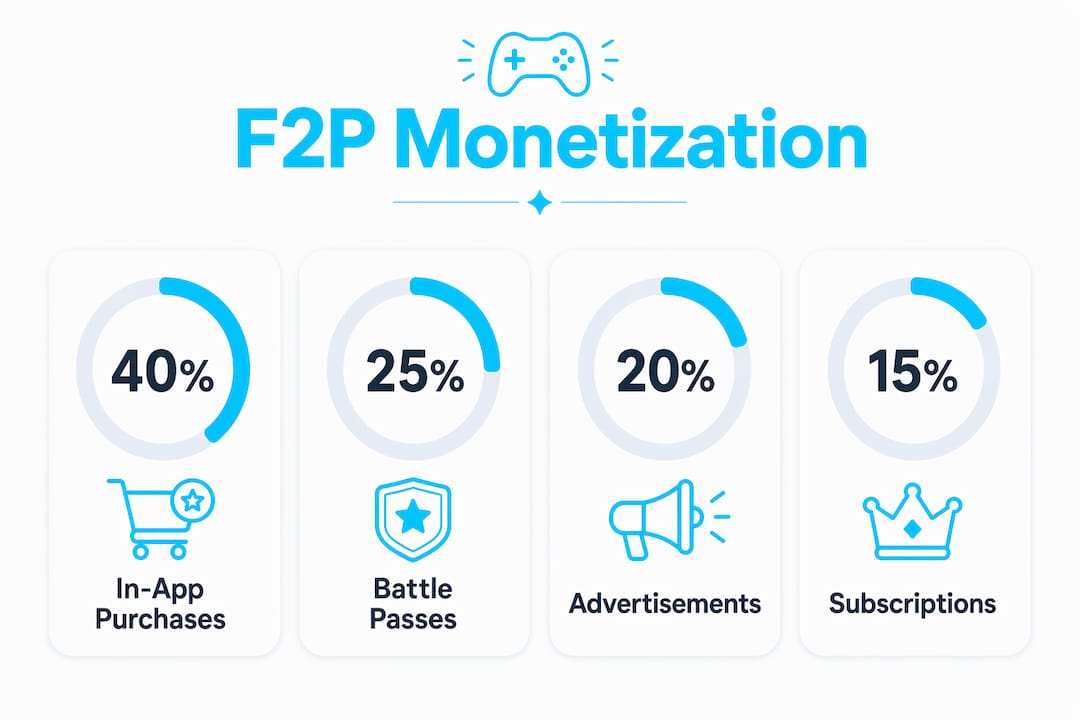
Why online games are free explained: the F2P model
Free-to-play is a business model, not a charity. When a studio releases a game at zero cost, it is making a calculated bet: the bigger the player base, the more revenue opportunities exist inside the game. Fortnite has hundreds of millions of registered accounts, and that scale is only possible because the barrier to entry is zero.
The costs behind a free game are very real. Servers, updates, and development never stop costing money, which means every free game needs a funding engine running underneath it. That engine is monetization, and it kicks in after you are already hooked. This is the core insight: "free" means free to start, not free forever.
Browser-based games take this a step further. HTML5 and WebGL browser games run directly in your browser without any installation, which removes even more friction. Lower friction means more players, which means more ad impressions and more potential buyers of optional content. The model scales beautifully at zero upfront cost.
How do free-to-play games actually make money?
Studios do not rely on a single revenue stream. Most successful free games stack multiple monetization methods on top of each other, and knowing what they are helps you spend smarter.
Here are the main ways free games generate revenue:
- Microtransactions: Small purchases for cosmetic items like character skins, weapon wraps, or emotes. These do not affect gameplay but are hugely popular. League of Legends has sold cosmetic skins for years and built a multi-billion dollar business on them.
- Virtual currency: Games sell a premium in-game currency (V-Bucks in Fortnite, Riot Points in League of Legends) that creates a psychological buffer between real money and spending decisions. Buying 1,000 V-Bucks feels less significant than spending $10 directly.
- Progression boosts: Some games sell XP multipliers or time-savers that speed up your progress. These sit in a gray area between cosmetic and pay-to-win.
- Advertisements: Browser and mobile games frequently use rewarded video ads, banner ads, and interstitials. You watch a 30-second ad and get an in-game reward. The developer earns ad revenue. Everyone technically wins.
- Battle passes: A seasonal subscription model where you pay a fixed price (usually $10 to $15) for a tiered reward track. Battle passes create recurring revenue and keep players engaged for an entire season because they feel compelled to unlock what they paid for.
- Subscriptions: Some platforms offer monthly memberships that unlock premium content, remove ads, or provide exclusive perks.
Pro Tip: If a game offers a battle pass, calculate the cost per day of the season before buying. A $10 pass over 90 days costs about 11 cents per day, which is genuinely good value if you play regularly.
Most games combine three or four of these methods simultaneously. A mobile game might run banner ads, sell cosmetics, and offer a monthly subscription all at once. That layered approach is intentional. Player data and segmentation allow studios to serve the right offer to the right player at the right moment, maximizing revenue without alienating the free majority.

Why do only some players pay, and how does that work?
This is the part that surprises most people. Only 2 to 5% of players in a typical free-to-play game ever spend money. The other 95 to 98% play entirely for free. That statistic means the entire free experience you enjoy is funded by a small minority of paying players. This is not a flaw in the system. It is the system.
Here is how the conversion funnel works in practice:
- Awareness: A player discovers the game because it is free. No financial risk means no hesitation to try it.
- Engagement: The player invests time, builds progress, and develops emotional attachment to their account or character.
- Temptation: The game surfaces a cosmetic item, a limited-time bundle, or a battle pass at the moment the player is most engaged.
- Conversion: A small percentage of players make their first purchase. Once someone spends once, they are statistically far more likely to spend again.
- Retention: The game uses ongoing content updates, seasonal events, and social features to keep paying players active and spending.
Within that paying minority, studios identify a segment called "whales." These are players who spend significantly more than average, sometimes hundreds or thousands of dollars. Whales are targeted with limited-time bundles and exclusive offers designed to maximize their lifetime value. A single whale can generate more revenue than hundreds of casual spenders combined.
The economic logic is elegant. Free players are not a burden. They populate servers, create competition, and make the game feel alive. Without them, paying players would have no one to play against, and the game would die. Every free player adds value to the ecosystem even without spending a cent.
Cosmetic vs. pay-to-win: how design shapes your experience
Not all free games are created equal, and the biggest difference comes down to what your money actually buys. This distinction matters a lot for your enjoyment and fairness.
| Monetization type | What you buy | Effect on gameplay | Player reception |
|---|---|---|---|
| Cosmetic only | Skins, emotes, visual effects | None. Purely aesthetic. | Generally positive |
| Battle pass | Seasonal reward track | Cosmetics plus XP boosts in some games | Mixed, usually accepted |
| Pay-to-win | Stronger weapons, stat boosts | Direct competitive advantage | Widely criticized |
| Loot boxes | Random item bundles | Varies by game | Controversial, regulated in some countries |
| Stamina gates | Energy refills to keep playing | Removes time restrictions | Frustrating for many players |
Cosmetic-only monetization preserves competitive fairness, which is why League of Legends and Fortnite have maintained massive player bases for years. You can spend zero dollars and still win every match. That fairness is a deliberate design choice, not an accident.
Pay-to-win models work differently. When spending money gives you a direct gameplay advantage, players who cannot or will not spend feel cheated. This drives away the free majority, which collapses the ecosystem that makes the game viable. Studios that go too far in this direction often see player counts drop sharply.
Pro Tip: Before spending anything in a new game, check community forums like Reddit to see whether the game is considered cosmetic-only or pay-to-win. Five minutes of research saves real money and frustration.
Loot boxes deserve a special mention. They function like randomized prize packs, and their similarity to gambling has attracted regulatory attention worldwide. The most high-profile case in the U.S. involved Fortnite: the FTC fined Epic Games $245 million for using deceptive interface design that pressured players, including children, into unintended purchases. That settlement reshaped how studios think about monetization ethics and UI design.
Why are browser and cloud games free to access?
Browser-based games occupy a special corner of the free gaming world. They run directly in your web browser using HTML5 technology, which means no download, no installation, and no waiting. That zero-friction access model is perfectly matched to ad-based monetization.
| Platform type | Installation required | Primary revenue source | Latency consideration |
|---|---|---|---|
| Browser (HTML5) | None | Ads, optional purchases | Low, depends on internet speed |
| Cloud streaming | None | Subscriptions, free tiers | Higher, requires strong connection |
| Downloaded F2P | Yes | Microtransactions, battle passes | Minimal after install |
Browser games monetize through ads and optional purchases without requiring any upfront commitment from the player. You open a tab, play a puzzle or racing game for ten minutes, and the developer earns ad revenue from that session. The economics work at massive scale because the cost to acquire each player is essentially zero.
Cloud gaming platforms like NVIDIA GeForce NOW offer free tiers with usage limits, then upsell premium subscriptions for longer sessions and priority access. The free tier serves as a demo that converts some users into paying subscribers. It is the same F2P funnel applied to a streaming service rather than a game itself.
For casual gamers, browser games represent the purest form of free gaming. No account required, no download, no credit card. Just click and play. That simplicity is why browser gaming has remained popular even as console and PC gaming have grown more sophisticated.
Key takeaways
Free-to-play games are free to start because a small paying minority funds the experience for everyone else, using microtransactions, ads, battle passes, and subscriptions as the actual revenue engine.
| Point | Details |
|---|---|
| F2P means free to start | Games cost nothing upfront but monetize through purchases, ads, and subscriptions after you play. |
| Only 2 to 5% of players pay | A small paying segment funds the free majority, making the model work at scale. |
| Cosmetic vs. pay-to-win matters | Cosmetic-only games preserve fairness; pay-to-win models create advantages that frustrate free players. |
| Browser games are the purest free model | HTML5 games run without installation and monetize through ads, making access genuinely frictionless. |
| Regulation is catching up | The FTC's $245 million Epic Games fine signals that deceptive monetization tactics face real legal consequences. |
The uncomfortable truth about "free" that most players miss
I have spent years watching people get surprised by game monetization, and the pattern is always the same. Someone downloads a free game, falls in love with it, and then feels blindsided when they hit a paywall or see a $20 skin they really want. The frustration is real, but it is based on a misunderstanding of what "free" actually means.
Free-to-play does not mean free to experience everything. It means free to enter. The studio's job is to make you care enough about the game that spending feels worth it. The best studios, like Riot Games with League of Legends, do this by making the free experience genuinely excellent. The worst studios use dark patterns, artificial scarcity, and countdown timers to pressure you into spending before you have thought it through.
The industry is moving in a better direction, slowly. The Epic Games FTC case was a turning point. Studios now know that predatory UI design carries legal and reputational risk. Player communities are also more vocal than ever about calling out pay-to-win mechanics and manipulative loot box systems.
My honest advice: treat every free game like a free sample at a grocery store. Enjoy it fully. Decide whether it is worth paying for based on your actual experience, not on a limited-time offer countdown. You have more power than the monetization system wants you to think you do. Understanding how the economics work is the first step to spending on your own terms.
— ping
Play free browser games right now on Tapcraftbox
Now that you know how free games work, you can enjoy them with eyes wide open! Tapcraftbox is a browser-based gaming platform where you can play free games instantly across action, puzzle, racing, sports, and multiplayer genres. No downloads. No registration. No upfront cost.
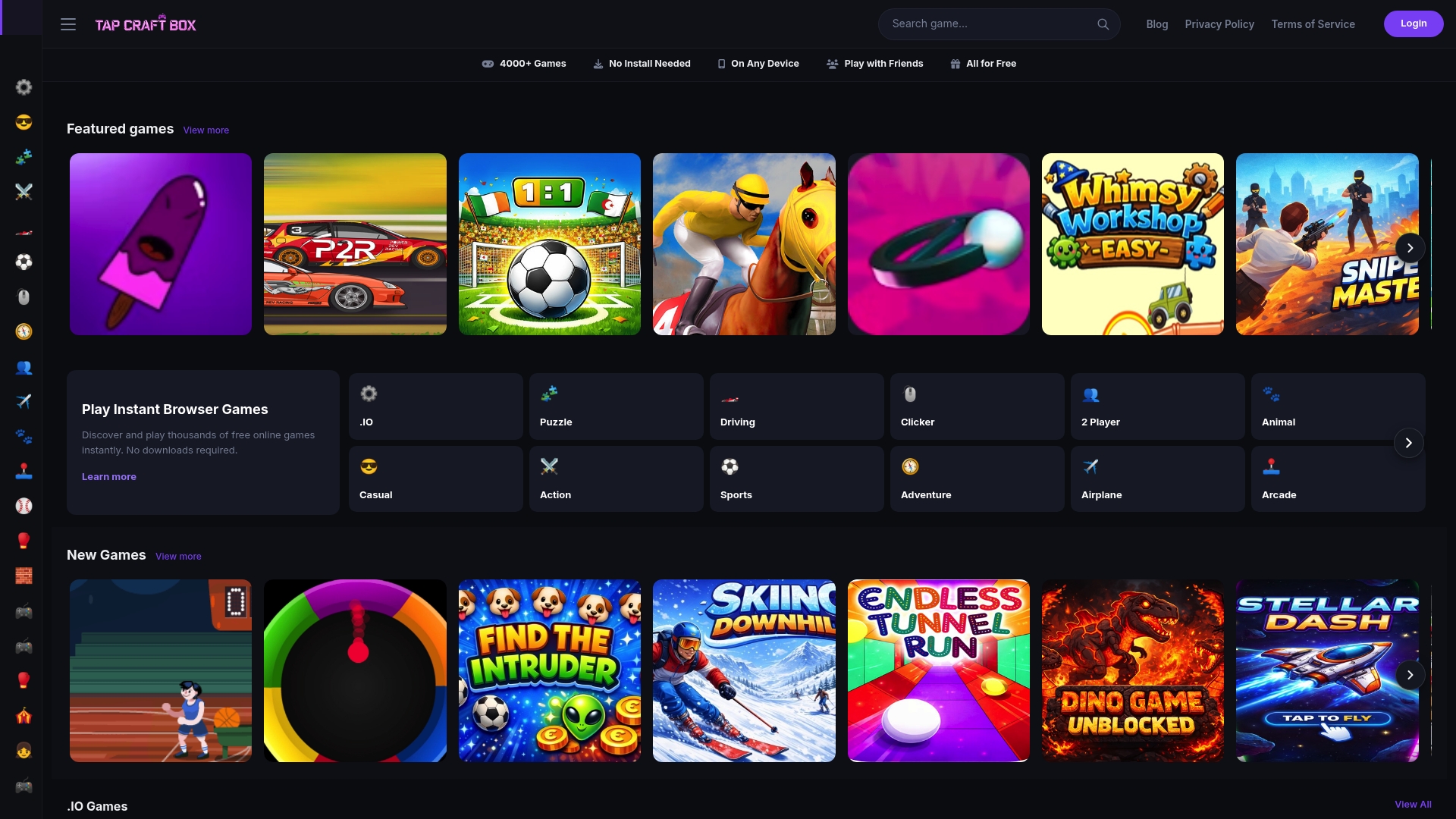
Tapcraftbox uses straightforward ad-based monetization, which means you get real, fun gameplay without pressure to spend. Whether you want a quick five-minute puzzle or a longer multiplayer battle with friends, the library has something for every mood. Jump in on any device, desktop, tablet, or smartphone, and start playing in seconds. That is free gaming the way it should be!
FAQ
What does free-to-play actually mean?
Free-to-play means a game has no upfront purchase price but generates revenue through in-game purchases, ads, or subscriptions after you start playing. The game itself is free to download or access, but optional content costs money.
Are online games really free, or is there a catch?
Online games are genuinely free to play at a basic level, but most include optional purchases for cosmetics, progression boosts, or premium content. You can enjoy the core experience without spending anything, though some games restrict content behind paywalls.
Why do only some players pay in free games?
Only 2 to 5% of players in a typical free-to-play game make purchases. The paying minority, including high spenders called whales, funds the free experience for everyone else through microtransactions and premium content.
What is the difference between cosmetic and pay-to-win purchases?
Cosmetic purchases change how your character or items look without affecting gameplay. Pay-to-win purchases give spending players a direct competitive advantage. Cosmetic-only monetization is widely considered fairer and is used by games like League of Legends and Fortnite.
Are browser games safe and truly free?
Browser games built on HTML5 technology are generally safe and free to play, monetizing through ads or optional purchases rather than upfront fees. Always use reputable platforms and check privacy policies, especially for younger players.